Doing your bit: Valuable financial, emotional, and social benefits of charitable giving
10 March 2026
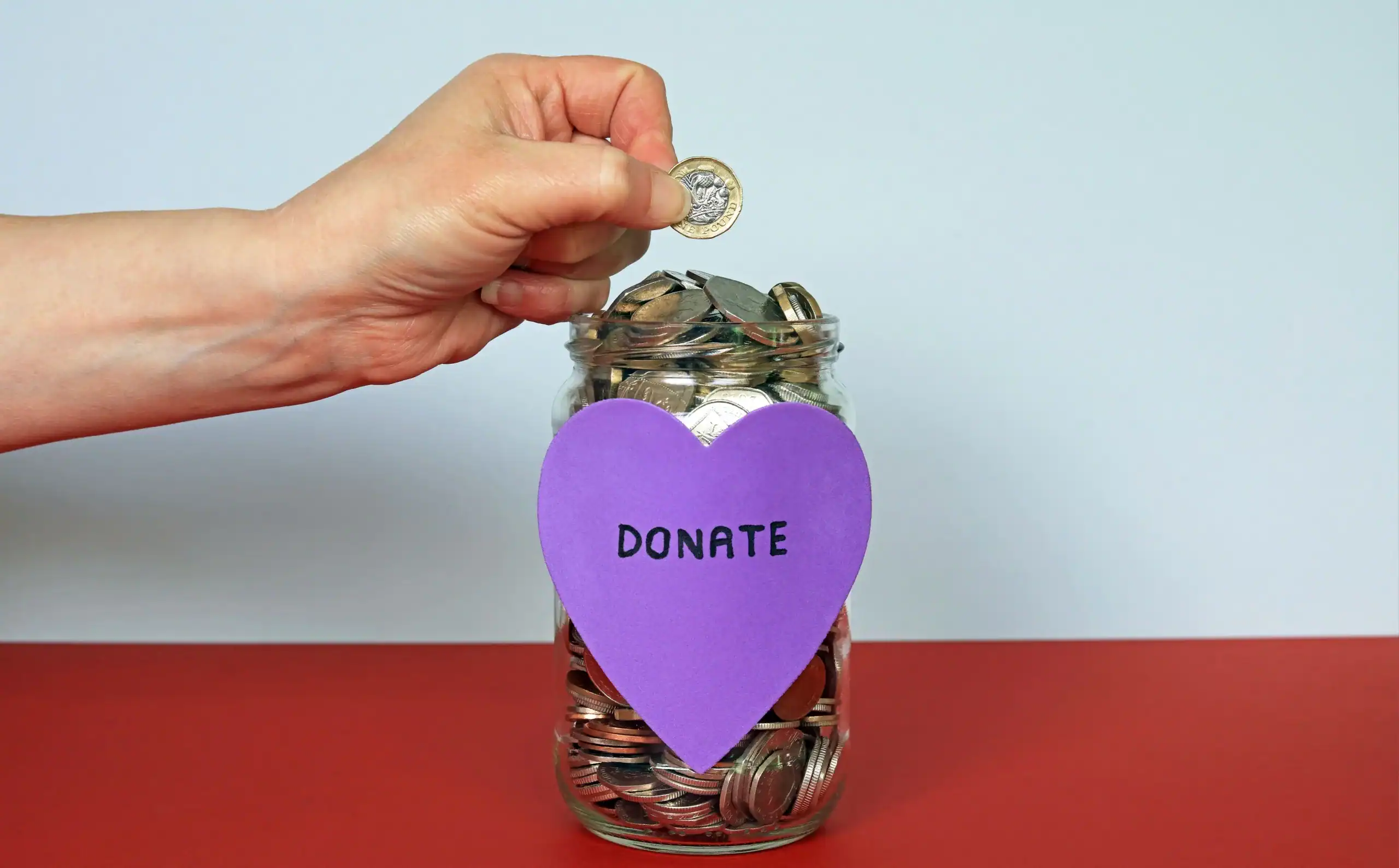
Whether you’re giving back to your local community or doing your bit to help those further afield, acts of charity could not only support others, but they could also be good for your own health and wellbeing.
3 ways giving can do wonders for your health and wellbeing
1. Charitable giving can strengthen your connection to others and deepen your sense of belonging
Whether you volunteer your time, take part in a fundraising event, or donate to a cause you care about, generosity is good for you.
Research shows that giving to charity activates regions of our brain associated with pleasure, social connection, and trust, creating a “warm glow” effect.
2. Giving can be good for your health
Studies suggest that people who support others often experience lower blood pressure and reduced stress levels. Volunteering has even been associated with increased longevity.
Acts of kindness lead your brain to release:
- Serotonin, helping to regulate your mood
- Dopamine, giving you a sense of pleasure
- Oxytocin, creating a sense of connection with others.
It’s also believed that charitable behaviour releases endorphins in the brain, producing the positive feeling known as the “helper’s high”.
3. Charitable giving can also bring financial advantages
Whether you bequeath funds to charity in your will or donate while you’re alive, there are several ways donating to charity could provide direct financial benefits to you.
For example, Gift Aid enables a charity to claim back the basic rate of tax you paid on your donation. So, a £100 donation is worth £125 to your charity.
Meanwhile, if you’re a higher- or additional-rate taxpayer, you can claim the difference between the rate of tax you pay and the basic rate on your donation through your Self Assessment return. In the example above, if you were a higher-rate taxpayer, you could claim an additional £25 of relief.
Leaving money to charity in your will could help to reduce Inheritance Tax (IHT) on your estate.
Charitable donations are usually free from IHT and you can use them to reduce the overall value of your estate by leaving money to charity in your will.
If you gift 10% of the net value of your estate – the value of your assets minus debts and funeral expenses, and your nil-rate bands – the rate at which your beneficiaries pay IHT drops from 40% to 36%.
To find out more, please get in touch for bespoke advice. Information shared here is for information only and based on our understanding of HMRC legislation, which is subject to change.
At Depledge, we do our bit
Andrew and Edward are undertaking separate challenges to raise money for two carefully selected charities. If you can donate to either of these challenges, your support would be greatly appreciated; please follow the links below.
Andrew is embarking on his longest swim to date for Lifeshare
Andrew has been a competitive swimmer since he was six. Now aged 54, he’s taking on his longest swim to date with the Coniston Lake end-to-end swim in June – a total of 5.25 miles in a wild, open-water swim.
He’s raising money to support Lifeshare, a charity close to the heart of Kim, one of his long-standing clients.
Andrew says, “I’ve decided to raise money for Lifeshare, Manchester’s oldest charity dedicated to supporting homeless and vulnerable people in Greater Manchester.
“Kim, one of my long-standing clients, gets up at 5.30 am every Sunday to help deliver a hot meal to people who have fallen on hard times.
“People can go from a normal and successful life to having no home very quickly when a business fails, a relationship breaks down, or, more often, through a series of setbacks. New research from Shelter shows at least 354,000 people in England, including 161,500 children, are without a home – a shocking increase of 44,500 people in just one year.
“If I suddenly question why I thought it a good idea to swim so far in a Cumbrian lake in June, I’ll remember how grim life is for too many people.”
To donate to Lifeshare and support Andrew in his Chillswim, please visit his JustGiving page, where you can find out more about Manchester’s oldest charity.
Edward is preparing to run the Manchester Marathon
Edward has been playing competitive rugby since he was a child, but a knee injury ended his days with the oval ball and in 2025 he had to have major surgery.
In the months following the operation, Eddy was seen hobbling around the office and to meetings and had a few setbacks on the road to recovery.
It’s been far from easy, but now Eddy is in training for the Manchester Marathon.
With the race taking place on 19 April 2026, Eddy hopes the 26.2-mile run will complete his journey back to peak fitness.
Eddy is raising money for Money Ready, a charity that helps educate young people in financial matters.
Explaining why he chose the charity, Eddy says: “Money Ready is a financial education charity dedicated to creating a financially fluent population. They believe that financial literacy should be considered a right for all because the language of money is a language for life, and this is something that resonates with me through my work as a financial planner.”
To donate to Money Ready and support Eddy as he embarks on his marathon run, please visit his JustGiving page, where you can find out more about the education programmes that Money Ready provides.
Get in touch
Whether you’d like to hear more about Andrew and Edward’s upcoming events or find out how charitable giving could support your financial plan, please get in touch.
Email [email protected] or call 0161 8080200.
Please note
This article is for general information only and does not constitute advice. The information is aimed at individuals only.
All information is correct at the time of writing and is subject to change in the future.
The Financial Conduct Authority does not regulate estate planning or will writing.