3 questions to help you calculate how much is “enough” to achieve your retirement goals

10 March 2026
Planning your retirement can be exciting and inspiring as you indulge in dreaming of all the things you’d like to do once you step away from work.
What may be more daunting, however, is calculating how much you might need to save to be able to afford the retirement of your dreams.
Recent figures published by PA Adviser suggest that a single person might need £682,000 to achieve a “comfortable” retirement.
To give you a little more context, Retirement Living Standards data provided by Pensions UK break this down into three levels of income:
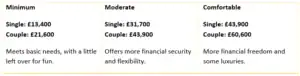
While these figures provide a useful starting point, the amount you’ll need in retirement will depend on your circumstances, goals, and other financial responsibilities.
“Comfortable” means different things to different people
Your definition of a “comfortable” retirement lifestyle might differ from the statisticians making the calculations.
To start calculating how much is enough for you, first you need a clear idea of how you’d like to spend your retirement.
Here are three questions to help you work out how much you may need to save for your ideal retirement.
1. What are your goals and ambitions for retirement?
The first step to understanding how much you’ll need to retire is to figure out how you’d like to spend your time.
This might seem a bit topsy-turvy, especially if you’re used to making plans based on what you feel you can afford, but it can be much more effective to start by considering your dreams and goals.
Once you know what you’re aiming for, you can work backwards to understand how much you’ll need to save to be able to afford the retirement you’d like to enjoy.
Some of the things you might consider are:
- Where would you like to live?
- How often would you like to be able to go on holiday?
- Would you like to visit anywhere new, or perhaps travel the world?
- Are there any hobbies you’d like to spend more time on, or take up?
- Would you like to continue working part-time, or set up your own business?
These are just some of the decisions that can affect how much you’ll need to save.
Don’t hold back – let your imagination run wild so that you can plan a truly fulfilling and enjoyable retirement.
2. What would your annual income need to be in retirement to cover these costs?
Once you’ve mapped out how you’d like your ideal retirement to look, it’s time to calculate what it might cost to achieve this lifestyle.
Remember to account for inflation and any tax that you may need to pay on your retirement income.
Start by calculating the annual income you might need. Using your preferred retirement date and average life expectancy, you can start to build a picture of how much you might need in your pension and other savings to sustain you throughout retirement.
These calculations should produce a rough figure to tell you how much you may need to aim for in your pension and other savings by the time you retire.
It’s important to remember that you can’t usually access pension wealth until you’re 55, rising to 57 in April 2028. The value of your pension may fluctuate and can go down, which could impact the level of pension benefits available.
The tax implications of pension withdrawals will also be based on your individual circumstances. And thresholds, percentage rates, and tax legislation may change.
We can help you create a personalised withdrawal strategy that minimises your tax liability while providing the cashflow you need.
3. Are your existing savings on track to achieve the required sum by the time you retire?
Now you know what you’re saving towards and how much you may need, it’s time to review your existing savings to see whether you’re on track to meet your goal.
Remember to check your State Pension forecast to see how much this might add to your annual income after you have reached State Pension Age. If you plan to retire before this, you’ll need to consider how to cover your expenses with your personal savings and pensions in the interim.
While you may consider your pension as the foundation of your retirement plan, pension funds benefit from tax-free growth, interest, and dividends, so you may wish to defer drawing on your pension.
With this in mind, it may be prudent to access your assets in a different order, such as:
- Cash savings
- Taxable investments
- ISAs
- Pensions
Please bear in mind that the value of your investments (and any income from them) can go down as well as up and you may not get back the full amount you invested. As such, investments should be considered over the longer term and fit in with your overall attitude to risk and financial circumstances.
From consolidating multiple pensions to maximising tax relief and choosing the right withdrawal strategy, we’ll help you navigate the complexities with ease.
Get in touch
If you’d like to learn more about how we can help you to achieve your retirement goals with a bespoke financial plan, please get in touch.
Email [email protected] or call 0161 8080200.
Please note
This article is for general information only and does not constitute advice. The information is aimed at individuals only.
All information is correct at the time of writing and is subject to change in the future.